
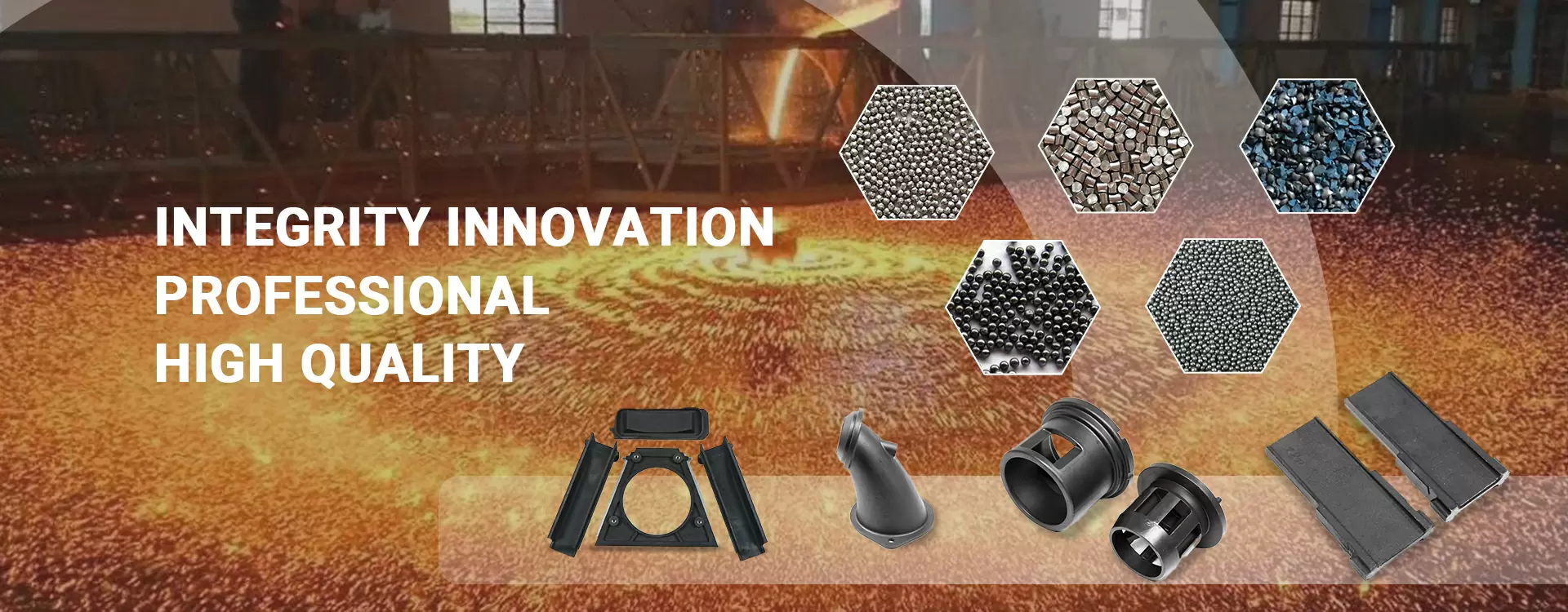
Machined parts: Made from steel plates, round steel, and mould steel (such as Cr12MoV), shaped through turning, milling, drilling, cutting, and heat treatment; unlike traditional high-chrome cast parts, they are mostly used for impeller bodies, spindle seats, pressure blocks, clamping plates, non-standard protective plates, and replacement parts for imported equipment.
1. Core Advantages
1. High dimensional accuracy and good assembly fit
- CNC machining ensures controllable tolerances without the deformation or shrinkage problems associated with casting; installation holes and mating surfaces are precise, fitting perfectly without gaps, looseness, or shot leakage.
- Impeller bases and clamping plate parts achieve balance more easily, reducing vibration and noise in operation and minimising bearing wear.
2. Dense material, no internal casting defects
- Made from rolled steel plates or mould steel billets, avoiding casting defects like porosity, shrinkage cavities, and sand holes; strong impact and fracture resistance, not easily cracked under high-speed shot impact.
- Uniform material with stable hardness and toughness, preventing premature local wear or damage.
3. Strong non-standard customisation capability
- For old, imported, or discontinued models, parts can be quickly produced from samples or measured dimensions; not limited by molds, suitable for small batches and irregular shapes.
- Thickness, holes, and structure can be adjusted as needed, ideal for equipment upgrades.
4. Comprehensive service life advantage
- Mould steel machined parts undergo vacuum heat treatment, combining high hardness and toughness; under heavy load or large shot volume, lifespan generally exceeds ordinary cast parts, reducing replacement frequency.
- Less prone to sudden breakage, lowering safety risks to the chamber and workpieces.
5. Good surface quality, reducing abrasive jamming
- Smooth processed surfaces without casting sand or burrs; steel shot is less likely to stick, reducing local abnormal wear.
6. Flexible delivery
- No mould required, short lead time for prototypes and small orders; suitable for urgent repair parts.
Disadvantages of Machined Shot Blasting Machine Parts
Compared to traditional high-chrome cast iron parts, the main disadvantages are cost, machining limitations, certain wear resistance aspects, and batch efficiency:
1. High procurement cost
- Using steel plates or mould steel bars with CNC machining and heat treatment, the cost per piece is much higher than cast parts.
- Standard consumables (blades, directional sleeves, shot wheels) are significantly more expensive if made by machining, making them uneconomical.
2. Difficult machining of complex shapes, high cost
- Suitable for simple structures: clamping plates, pressure blocks, impeller bases, flanges, non-standard thick protective plates.
- Thin-walled, curved, or complex flow path parts are unsuitable; thin curved blades incur high material waste and long machining times, resulting in low cost-effectiveness. High-chrome casting remains the industry standard.
3. Wear resistance varies with material, not necessarily better than high-chrome cast iron
- Ordinary carbon or alloy steel machined parts have lower wear resistance than high-chrome white cast iron if not specially heat treated.
- Only mould steel with proper heat treatment provides superior wear resistance; inadequate heat treatment can cause fast wear or brittleness, while high-chrome cast parts are naturally wear-resistant due to high alloy content.
4. Lower production efficiency for large orders
- Casting allows multiple items per mould for fast mass production.
- Machining each piece requires machine time, extending lead times for large orders, making it unsuitable for tens of thousands of standard consumables.
5. Heavier weight
- Machined parts often come from solid thick plates or billets, resulting in heavier components compared to hollow or weight-reduced cast parts. For rotating impellers, extra weight slightly increases bearing and motor load.
6. Limited heat dissipation for some structures
- Cast parts can be designed with loose or hollow structures for heat dissipation; solid machined parts retain heat during continuous high-load shot blasting.
Summary of Selection
✔ Suitable for machining: Impeller bases, clamping plates, pressure blocks, flanges, replacement parts for imported equipment, non-standard thick protective plates, small-batch repair parts.
✔ Suitable for casting: Blades, shot wheels, directional sleeves, and other large-batch thin-walled standard wear parts.
Awesome! Share to:

ZIBO YIJIA INDUSTRIAL TECHNOLOGY CO., LTD
Chuangye Huoju, Liuquan Rd, Zibo, Shandong, China 255000
Get in Touch
*We respect your confidentiality and all information are protected.