

Introduction
Heavy machinery components are often exposed to rust, mill scale, welding residues, and other surface contaminants during manufacturing and service. Before protective coating or further processing, effective surface preparation is essential. Steel grit blasting is widely used for cleaning heavy steel components, removing surface contaminants, and creating a suitable profile for subsequent coating applications.
However, blasting results depend on several factors, including abrasive size, hardness, equipment configuration, and the initial condition of the workpiece. This guide explores steel grit blasting requirements for heavy machinery, covering common applications, surface cleanliness standards, abrasive selection, equipment considerations, and practical ways to evaluate surface preparation results.
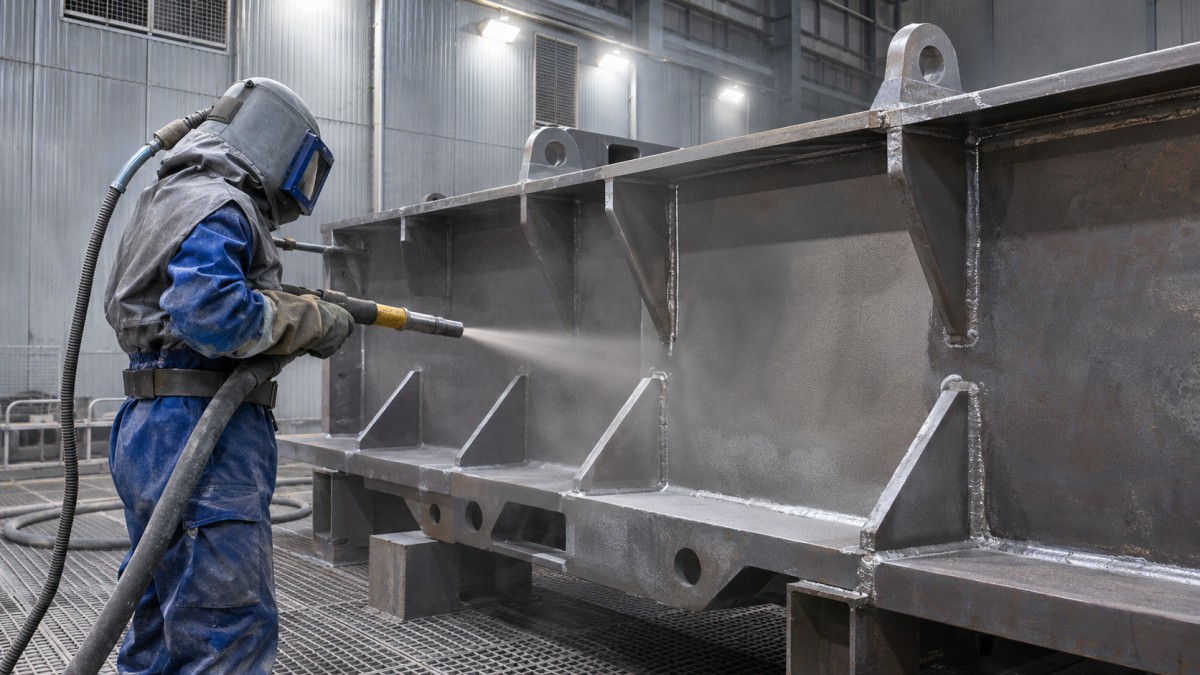
Why Steel Grit Blasting Is Important for Heavy Machinery
Heavy machinery often consists of large steel structures, welded assemblies, cast components, and fabricated parts that are exposed to demanding operating environments. During manufacturing, transportation, and service, these components may develop rust, mill scale, old coating residues, and other surface contaminants. Before protective coating or further processing, these materials need to be properly prepared.
Steel grit blasting is an abrasive cleaning method used to remove firmly attached surface contaminants and create a suitable surface profile for subsequent coating applications. Its angular particles impact the steel surface, helping remove rust, mill scale, and deteriorated coatings while producing a textured surface.
Several aspects make steel grit blasting relevant to heavy machinery manufacturing and maintenance:
1. Removal of Rust and Mill Scale
Steel plates, welded structures, and fabricated components may carry rust and mill scale before coating. Abrasive blasting helps remove these surface layers and expose the underlying steel for further inspection and preparation.
2. Preparation for Protective Coatings
Protective coatings require an appropriately cleaned and prepared substrate. The surface profile created by blasting provides a mechanical anchor for coating systems. The required cleanliness and profile should be determined by the coating manufacturer's recommendations and the project's specifications.
3. Treatment of Large and Complex Steel Components
Heavy machinery components may include frames, support structures, welded joints, and irregular surfaces. Abrasive blasting can be used to prepare these areas, although recessed sections, narrow gaps, and inaccessible surfaces require particular attention to ensure adequate coverage.
4. Support for Equipment Maintenance and Recoating
During maintenance, deteriorated coatings and corrosion may need to be removed before a new protective system is applied. The required preparation method depends on the condition of the existing coating, the substrate, and the maintenance specification.
It is important to note that abrasive blasting is not a substitute for degreasing or removing soluble salt contamination. Oil, grease, and other contaminants should be addressed before blasting to avoid spreading contamination across the prepared surface.
For heavy machinery, the objective is therefore not simply to make steel surfaces look clean, but to achieve a defined surface condition that is suitable for the next manufacturing or coating operation.
Common Heavy Machinery Components That Require Steel Grit Blasting
Steel grit blasting is used in various heavy machinery manufacturing and maintenance processes, particularly when steel components require rust removal, mill scale removal, or surface preparation before protective coating. The treatment requirements depend on the component's material, geometry, initial surface condition, and subsequent application.
1. Construction Equipment Components
Construction machinery, including excavators, loaders, and bulldozers, contains numerous welded steel structures and fabricated components. Typical examples include equipment frames, support structures, mounting brackets, and heavy steel housings.
During manufacturing, these parts may develop mill scale, welding residues, and surface oxidation. Steel grit blasting can help remove firmly attached surface contaminants before coating. Particular attention should be paid to welded joints, corners, and connections where residues or contaminants may accumulate.
2. Mining Machinery Components
Mining equipment operates in environments involving abrasive materials, dust, moisture, and mechanical wear. Steel structures, equipment frames, support housings, and fabricated steel components may require surface preparation during manufacturing or maintenance.
For components undergoing recoating, the existing coating condition should be evaluated first. Loose or deteriorated coatings, corrosion products, and other contaminants may need to be removed according to the maintenance specification. The preparation method should also account for the component's remaining condition and any restrictions on abrasive impact.
3. Agricultural Machinery Components
Agricultural machinery often includes welded frames, steel brackets, protective housings, and structural supports. Exposure to moisture, soil, fertilizers, and outdoor conditions can contribute to corrosion.
Before applying a protective coating, the steel surface should be checked for rust, dirt, grease, and other contaminants. Abrasive blasting may be suitable for accessible steel components, while assembled parts containing sensitive surfaces or functional components may require masking or alternative cleaning methods.
4. Heavy Industrial Equipment and Structural Assemblies
Large industrial machines may contain steel bases, support frames, platforms, fabricated structures, and welded assemblies. Their size and geometry can make consistent surface preparation more challenging.
Blasting plans should identify accessible surfaces, recessed areas, weld seams, and connections. These locations may require additional inspection because abrasive coverage and the removal of residues can vary across complex structures.
5. Cast and Fabricated Steel Components
Cast steel parts, welded structures, and fabricated steel plates can have different initial surface conditions. Cast components may contain molding residues or surface irregularities, while fabricated parts may have mill scale, weld spatter, and cutting residues.
The preparation process should be selected according to the actual material condition and the required finish. Particular attention should be given to edges, weld transitions, pits, and other areas where contaminants may remain.
Important: Steel grit blasting is not automatically suitable for every heavy machinery component. Precision-machined surfaces, sealing areas, bearing fits, hydraulic rods, and other functional surfaces may require masking or a different preparation method to avoid unwanted dimensional or surface changes.
Surface Cleaning Requirements Before Protective Coating
For heavy machinery components, achieving the required surface condition before protective coating involves more than removing visible rust. The steel substrate must meet the specified cleanliness level, have an appropriate surface profile, and be free from contaminants that could affect coating adhesion and performance.
Three key aspects should be considered: surface cleanliness, surface profile, and contamination control.
1. Surface Cleanliness: Understanding Sa Blast-Cleaning Grades
The cleanliness of blast-cleaned steel surfaces is commonly assessed using ISO 8501-1:2007, which defines four abrasive blast-cleaning grades: Sa 1, Sa 2, Sa 2½, and Sa 3.
These grades describe different levels of visual cleanliness rather than fixed requirements for every heavy machinery component.
For example, newly fabricated steel structures with mill scale may require a different preparation specification from previously painted components undergoing maintenance. The required grade should be determined by the protective coating system, initial steel condition, and project specification.
2. Surface Profile: Creating the Right Anchor Pattern
After abrasive blasting, the steel surface develops peaks and valleys that form its surface profile. This profile provides mechanical anchoring for protective coatings and helps establish suitable conditions for coating application.
However, a rougher surface is not automatically better. If the profile is too shallow, the coating may not achieve the required anchoring characteristics. If it is excessively rough, the coating may not adequately cover the surface peaks, potentially leaving insufficient film thickness at those locations.
The required profile should therefore be matched to the coating manufacturer's recommendations and project specifications.
For measurement and assessment, the ISO 8503 series provides methods and requirements for evaluating the surface roughness of blast-cleaned steel. Surface profile comparators can be used to assess surfaces prepared with either grit or shot abrasives.
3. Contamination Control: Oil, Salts, and Dust
A surface may appear clean after blasting but still contain contaminants that affect coating performance. Three categories deserve particular attention.
Oil and Grease: These contaminants should be removed before abrasive blasting. Otherwise, blasting may spread them across the steel surface rather than eliminate them effectively. Suitable degreasing or cleaning methods should be selected before mechanical treatment.
Soluble Salts: Chloride and other water-soluble contaminants can contribute to coating defects and corrosion under a protective coating. Mechanical blasting alone should not be assumed to remove soluble salts. Where required by the project specification, salt contamination should be checked using an appropriate method, such as the extraction procedure described in ISO 8502-6:2020.
Surface Dust: Dust and loose abrasive residues should be removed after blasting. ISO 8502-3:2017 describes the pressure-sensitive tape method for assessing dust remaining on steel surfaces prepared for painting.
4. Establishing the Final Inspection Requirements
Before coating begins, the inspection plan should identify the required cleanliness grade, surface profile, dust assessment, and soluble salt limits where applicable.
The results should be compared with the coating manufacturer's technical requirements and the project's acceptance criteria. Inspectors should also check difficult areas such as weld seams, corners, recessed sections, and edges, where surface preparation may be less uniform.
The key principle is that surface cleanliness and surface profile are separate acceptance considerations. A component may meet its visual cleanliness requirement but still require further preparation if its surface profile or contamination level does not satisfy the coating specification.
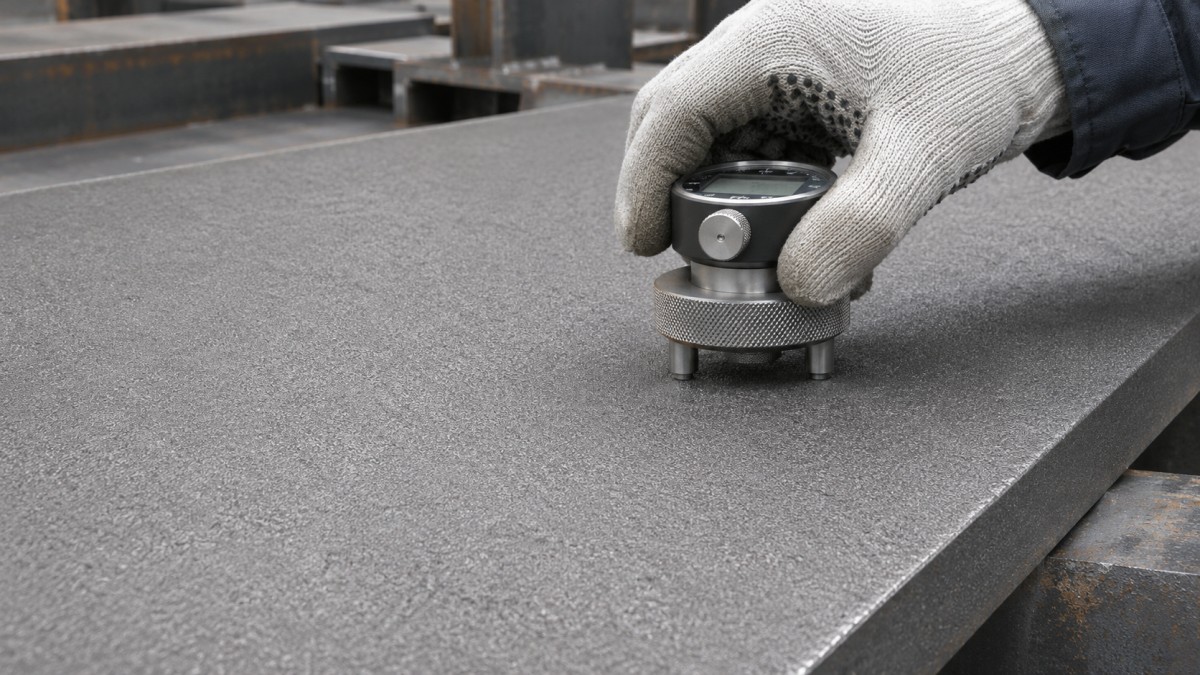
How to Select Steel Grit Size and Hardness for Heavy Machinery
Selecting the right steel grit for heavy machinery requires more than matching an abrasive size to the workpiece. Particle shape, grit size, hardness, equipment capability, and the required surface profile all influence the blasting result.
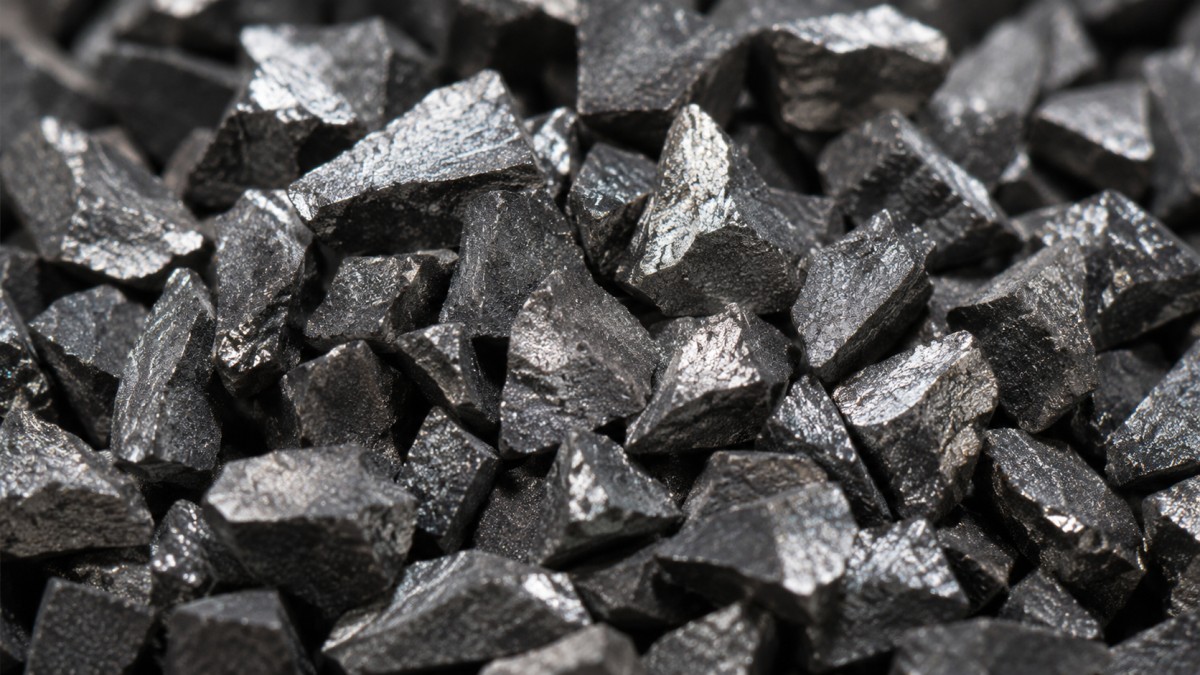
High carbon steel grit is an angular abrasive used for removing rust, mill scale, and other firmly attached surface contaminants. When selecting it for heavy steel components, buyers should evaluate the following factors.
1. Steel Grit Particle Shape
Unlike spherical steel shot, steel grit has angular particles with multiple cutting edges. During blasting, these edges impact the workpiece and help remove surface layers while producing an anchor profile.
This makes angular steel grit a relevant abrasive option when the application requires rust removal, scale removal, or a textured surface before protective coating.
Steel shot has a spherical shape, while steel grit has an angular shape. Steel shot is commonly used for surface cleaning and shot peening, whereas steel grit is often selected for applications requiring more aggressive surface cleaning and a suitable anchor profile before coating.
The final choice depends on the workpiece, equipment configuration, and required surface condition.
2. Steel Grit Size and Surface Profile
Grit size affects the impact pattern and the surface profile produced during blasting. In general, larger abrasive particles deliver more concentrated impacts, while smaller particles provide a finer impact pattern under comparable operating conditions.
The appropriate size should be determined by considering:
Initial surface condition: Heavy rust, firmly attached mill scale, and existing coating residues may require a different blasting approach from lightly oxidized steel.
Required surface profile: The abrasive size should be compatible with the profile specified by the coating system.
Workpiece geometry: Large steel plates and open structures may allow different blasting conditions from narrow sections, corners, and complex welded assemblies.
Blasting equipment: The abrasive must be compatible with the equipment's operating conditions and abrasive circulation system.
Yijia's high carbon steel grit product range includes G-series sizes such as G10, G12, G14, G16, G18, G25, G40, G50, G80, and G120. The supplied product specification lists a size range of 0.2–2.5 mm.
These designations should be checked against the applicable grading and sieve-size data before ordering. A G-series designation alone should not be treated as a complete surface-profile specification.
3. Steel Grit Hardness
Hardness influences how abrasive particles behave during impact and repeated circulation.
According to the supplied Yijia high carbon steel grit specifications, the product range includes three hardness grades:
Abrasive hardness should be considered together with workpiece material, surface condition, equipment capability, and the required treatment result. A harder abrasive is not automatically the better choice for every application.
For example, when processing heavy steel structures, the buyer should consider whether the selected grit can remove the existing surface layers effectively without creating an unsuitable surface profile or causing excessive abrasive breakdown.
4. High Carbon Steel Grit Product Specifications
The following information summarizes the product characteristics listed in the supplied high carbon steel grit documentation.
The specifications should be checked against the applicable product grade and technical documentation when selecting a particular abrasive.
5. Match Abrasive Selection to the Complete Blasting Process
Before confirming a steel grit specification, check the following information:
For heavy machinery manufacturers and surface treatment contractors, the practical objective is to achieve the specified cleaning result consistently, rather than simply selecting the largest or hardest available steel grit.
Steel Grit Blasting Process for Heavy Machinery Manufacturing and Maintenance
Steel grit blasting is used at different stages of heavy machinery production and maintenance. To achieve consistent surface preparation, manufacturers should control the process from initial workpiece inspection to final surface acceptance.
1. Inspect the Workpiece Before Blasting
Before treatment, identify the workpiece material, dimensions, geometry, and initial surface condition.
Check for rust, mill scale, old coating residues, oil, grease, and other contaminants. Weld seams, edges, recessed areas, and complex connections should receive particular attention because these areas may require additional preparation.
Precision-machined surfaces, sealing areas, and other sensitive functional sections should be identified for masking or alternative treatment.
2. Remove Oil and Other Surface Contaminants
Oil and grease should be removed before abrasive blasting to prevent contamination from spreading across the steel surface.
The cleaning method should be appropriate for the workpiece material and the type of contamination. Any remaining cleaning agents or residues should also be addressed before blasting begins.
3. Carry Out Steel Grit Blasting
Select the abrasive specification and blasting conditions according to the required surface preparation grade, surface profile, equipment configuration, and workpiece geometry.
During blasting, ensure that the required surfaces receive adequate abrasive coverage. Complex structures may require changes in nozzle direction, component positioning, or blast wheel arrangement.
The process should be controlled to avoid untreated areas and unsuitable surface profiles.
4. Inspect the Prepared Surface
After blasting, inspect the surface against the project requirements.
Check visual cleanliness, surface profile, dust, and soluble salts where specified. Particular attention should be given to weld seams, corners, edges, and recessed areas.
If any area does not meet the acceptance criteria, determine whether additional cleaning or surface treatment is required before coating.
5. Coordinate Surface Preparation with Protective Coating
Once the required surface condition has been achieved, the prepared steel should be protected from moisture, dust, and other contamination.
The interval between blasting and coating should follow the coating manufacturer's instructions and project requirements. Inspect the surface again before painting, particularly if the workpiece has been stored or exposed to changing environmental conditions.
A controlled process helps ensure that the prepared surface is suitable for the specified protective coating system.
Choosing the Right Blasting Equipment and Abrasive Recycling System
The effectiveness of steel grit blasting depends not only on abrasive specifications but also on the blasting equipment and abrasive recovery system. For heavy machinery components, the equipment should match the workpiece dimensions, geometry, production requirements, and accessibility of the surfaces being treated.
Two common dry abrasive blasting methods are centrifugal wheel blasting and compressed-air blasting. Each has different operating characteristics and application requirements.
1. Centrifugal Wheel Blasting Systems
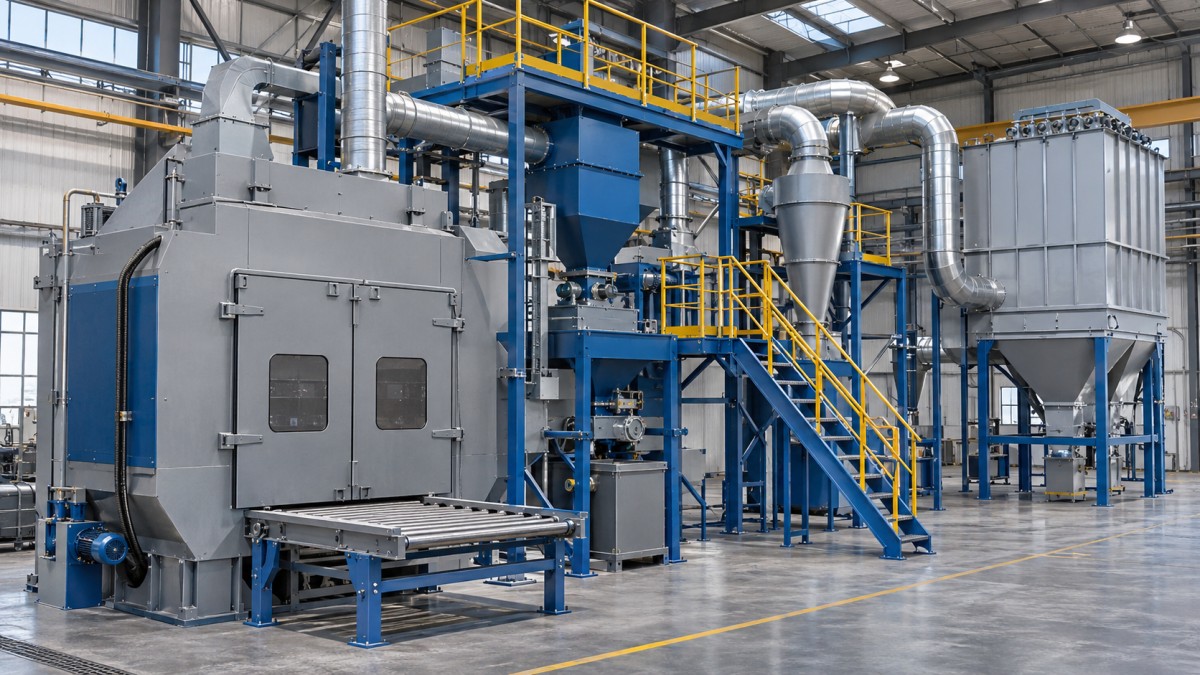
Centrifugal wheel blasting uses rapidly rotating wheels or impellers to propel abrasive particles toward the workpiece. The process is generally performed inside an enclosed blasting cabinet or chamber, where components pass through the abrasive stream.
This method is commonly used in production environments involving repeatable workpieces, such as steel plates, profiles, and fabricated structural components.
Its main considerations include:
Production consistency: Controlled conveyor speed and wheel operation help maintain repeatable treatment conditions.
Abrasive recovery: Used abrasive can be collected, separated, and returned to the blasting system.
Workpiece geometry: The equipment is more suitable for components that can be conveyed through the blasting chamber and exposed adequately to the blast pattern.
Surface coverage: Multiple blast wheels or repeated passes may be required for complex profiles or areas that are not directly exposed to the abrasive stream.
2. Compressed-Air Blasting Systems
Compressed-air blasting uses an air compressor, abrasive blasting pot, hoses, and nozzles to propel abrasive particles onto the workpiece.
Unlike fixed production lines, this method allows operators to direct the blasting nozzle toward different areas of a component. It is therefore useful for large structures, irregular geometries, and maintenance work.
Important factors include:
Air supply: Compressor capacity and nozzle requirements must be compatible to maintain the required operating conditions.
Access to complex areas: Operators can direct the abrasive stream toward weld seams, corners, and recessed sections.
Dust management: Suitable containment, ventilation, and dust collection are important, particularly during blasting of large structures.
Abrasive recovery: Reusable steel grit can be collected through a suitable blast-room or on-site recovery arrangement, depending on project conditions.
3. Abrasive Recovery and Separation
Steel grit can be reused in suitable blasting systems, but effective recycling requires more than collecting spent abrasive.
During blasting, the abrasive becomes mixed with rust, mill scale, coating debris, dust, and broken abrasive particles. These contaminants should be separated before the material returns to the working abrasive supply.
A typical recovery process involves:
Collecting spent abrasive and surface-treatment debris.
Screening or separating oversized foreign materials.
Removing fine particles, dust, and other contaminants through an appropriate separation system.
Returning the conditioned abrasive to the storage and feeding system.
Monitoring the abrasive condition and replenishing the working mix when necessary.
The purpose is to maintain a suitable abrasive size distribution and reduce contamination in the circulating media.
4. Selecting Equipment According to Workpiece Requirements
These are general equipment-selection considerations, not universal performance rankings. Actual productivity, abrasive consumption, and surface quality depend on equipment configuration, operating conditions, workpiece geometry, and abrasive condition.
For heavy machinery manufacturers, selection should begin with component dimensions and geometry, production volume, required surface preparation grade, and available abrasive recovery facilities.
Common Steel Grit Blasting Problems and How to Prevent Them
Steel grit blasting does not always produce the expected surface condition. In heavy machinery manufacturing and maintenance, problems may result from unsuitable abrasive specifications, inconsistent equipment operation, inadequate surface coverage, or insufficient post-blasting cleaning.
Identifying the possible causes helps manufacturers and surface treatment contractors improve process control and reduce unnecessary rework.
1. Incomplete Rust and Mill Scale Removal
Rust, mill scale, or old coating residues may remain after blasting, particularly in recessed areas, corners, and complex welded structures.
Possible causes include insufficient abrasive coverage, unsuitable blasting conditions, worn equipment components, or abrasive media that no longer has an appropriate working size distribution.
To address this problem, inspect the blasting pattern, equipment condition, abrasive supply, and difficult-to-reach areas. If contamination remains, determine whether additional blasting or a different preparation method is required.
2. Uneven Surface Profile
An inconsistent surface profile can occur when different areas receive unequal abrasive exposure or when blasting conditions vary during operation.
This may affect the consistency of the subsequent coating application. Manufacturers should inspect representative areas rather than relying only on the overall visual appearance of the workpiece.
Check nozzle distance and angle in compressed-air blasting, wheel operation in centrifugal blasting, abrasive size distribution, and the coverage of complex surfaces. Surface profile measurements should be compared with the coating specification.
3. Excessive Abrasive Breakdown
Steel grit undergoes repeated impacts during blasting and recycling. Over time, particles may fracture, wear down, or change their size distribution.
Excessive breakdown can increase the proportion of fine particles in the working abrasive mix, potentially affecting blasting performance, dust generation, and abrasive consumption.
A suitable abrasive separation and screening system helps remove unwanted fines and foreign materials. Regularly monitoring the working abrasive condition also helps identify when replenishment or adjustment is necessary.
4. Dust and Abrasive Residues After Blasting
Residual dust and loose abrasive particles may remain on the workpiece after treatment, especially around weld seams, corners, and recessed sections.
These residues should be removed before coating. Appropriate cleaning methods may include industrial vacuum equipment or clean, dry compressed air, depending on the project specification and contamination-control requirements.
Surface dust assessment can be carried out using the method described in ISO 8502-3:2017.
5. New Rust Formation After Surface Preparation
Freshly blast-cleaned steel can develop new rust when exposed to moisture, condensation, or unsuitable storage conditions before protective coating is applied.
The risk depends on environmental conditions, surface temperature, and the time between surface preparation and coating. Manufacturers should coordinate surface preparation with the coating schedule, protect prepared steel from moisture, and inspect the surface immediately before painting.
If visible rust develops, the affected surface should be evaluated and re-prepared as required by the project specification.
Practical Inspection Checklist
The key to preventing blasting problems is to control the complete preparation process rather than focusing on abrasive quality alone. Abrasive specifications, equipment operation, surface inspection, and post-blasting handling all contribute to the final surface condition.
FAQ About Steel Grit Blasting for Heavy Machinery
1. What Is Steel Grit Blasting Used for in Heavy Machinery?
Steel grit blasting is used to remove rust, mill scale, old coating residues, and other firmly attached surface contaminants from suitable steel components. It is commonly considered for heavy machinery frames, welded structures, fabricated steel parts, and components requiring surface preparation before protective coating.
2. What Is the Difference Between Steel Shot and Steel Grit?
Steel shot has a spherical shape, while steel grit has an angular shape. Steel shot is commonly used for surface cleaning and shot peening, whereas steel grit is often selected for applications requiring more aggressive surface cleaning and a suitable anchor profile before coating.
The final choice depends on the workpiece, equipment configuration, and required surface condition.
3. What Steel Grit Size Is Suitable for Heavy Equipment?
There is no single steel grit size suitable for every heavy equipment component. Selection depends on the initial surface condition, required surface profile, workpiece geometry, and blasting equipment.
Buyers should compare the abrasive grading and sieve-size data with the coating specification and equipment requirements before confirming a product size.
4. What Surface Cleanliness Grade Is Required Before Painting?
The required cleanliness grade depends on the coating system and project specification. ISO 8501-1:2007 defines four common abrasive blast-cleaning grades: Sa 1, Sa 2, Sa 2½, and Sa 3.
Sa 2½ is commonly specified for many protective coating applications, but it should not be treated as a universal requirement. The applicable project specification and coating manufacturer's recommendations should determine the final acceptance grade.
5. Can Steel Grit Be Reused in Blasting Systems?
Yes. Steel grit can be reused in suitable abrasive blasting systems when it is properly collected, separated, and maintained.
During recycling, broken particles, excessive fines, dust, and foreign contaminants should be removed. The working abrasive mix should be monitored to maintain suitable particle size distribution and blasting performance.
Conclusion: Choosing the Right Steel Grit for Heavy Machinery Surface Preparation
Steel grit blasting is an important surface preparation method for heavy machinery manufacturing, steel fabrication, and equipment maintenance. Achieving the required surface condition depends on more than abrasive quality alone. Workpiece material, initial surface condition, abrasive size, hardness, blasting equipment, and coating requirements all need to be considered together.
For manufacturers and industrial buyers, selecting the right high carbon steel grit starts with understanding the actual cleaning objective and the surface profile required before coating. Comparing product specifications with equipment conditions and project requirements helps narrow down suitable abrasive options.
Yijia offers high carbon steel grit for industrial abrasive blasting applications. If you are sourcing steel grit for heavy machinery components, steel structures, or other surface preparation projects, you can review the available product specifications and submit your application requirements for further product inquiries.
To help identify relevant product specifications, buyers can prepare the following information:
Workpiece material and component type.
Initial surface condition.
Required cleaning grade.
Blasting equipment type.
Required abrasive size and hardness, if specified.
Contact Yijia to discuss your steel grit requirements and explore suitable product specifications for your application.
Contact Yijia for Steel Grit Inquiries
Awesome! Share to:
Related Posts
- Steel Grit Blasting for Heavy Machinery: Surface Cleaning Requirements and Applications
- Zouping Xinyuan Metal Abrasive Co., Ltd | Steel Shot, Steel Grit Manufacturer China
- How to Choose a Reliable Steel Shot Supplier for Industrial Surface Preparation
- Low-Temperature Tempering High-Hardness Ultra Wear-Resistant Cast Steel Shot and Grit
- X-ABRASIVES

ZIBO YIJIA INDUSTRIAL TECHNOLOGY CO., LTD
Chuangye Huoju, Liuquan Rd, Zibo, Shandong, China 255000
Get in Touch
*We respect your confidentiality and all information are protected.